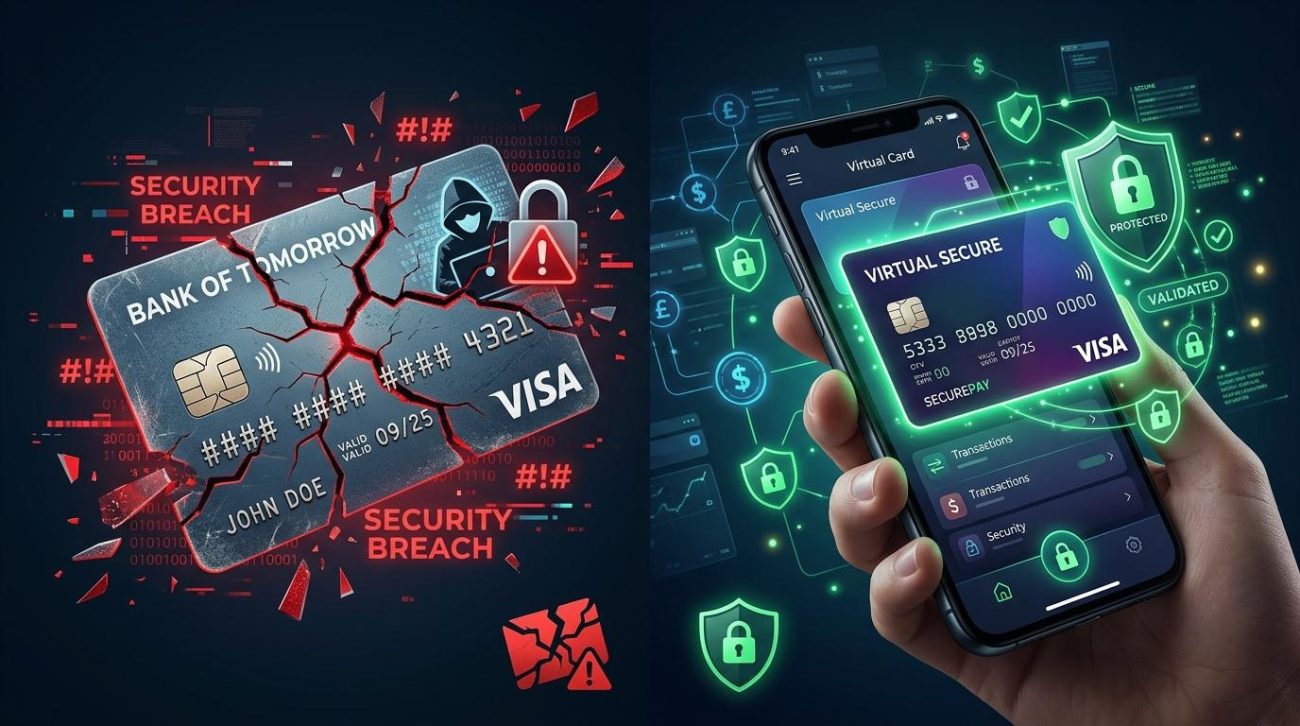
In 2026, the way we handle money online has undergone a fundamental shift. Gone are the days when a single physical bank card could reliably cover every digital transaction. With increasing cross-border payment restrictions and a rising number of data breaches, relying on your primary plastic card for everything from streaming subscriptions to professional ad accounts is no longer just inconvenient—it is a security liability.
The transition to virtual cards is not merely a trend for the tech-savvy; it is a defensive necessity. By decoupling your spending from your main bank account, you create a layer of isolation that keeps your core finances shielded from the volatile landscape of global digital commerce.
The Vulnerability of the “All-in-One” Plastic Card
The fundamental weakness of a physical card is its permanence. A single card number and CVC hold power over your entire balance for years. If that data is captured by a malicious entity, whether through a compromised website or a skimming device, you are forced to go through the painful process of canceling the card, updating all your automated payments, and waiting for a new one to arrive.
Beyond security, standard plastic cards are frequently rejected by international services due to regional banking restrictions or overly aggressive fraud-detection algorithms.
Virtual Cards: A New Standard for Financial Control
A virtual card is, for all intents and purposes, a digital-only bank card that carries its own unique credentials. The core philosophy here is “compartmentalization.” By generating a specific card for a specific purpose, you ensure that a breach at one service does not threaten your other financial obligations.
The security benefits of this approach are substantial:
- Granular Spending Limits: You can define exactly how much money can be drawn from a virtual card. This serves as a fail-safe; even if a site is compromised, the attacker cannot drain your entire account because the card’s limit acts as a hard ceiling.
- Temporal Control: Many virtual card providers allow you to set expiration dates. You can create a card that is only active for 24 hours, effectively neutralizing any risk of future unauthorized charges from that specific vendor.
- The “Burner” Option: For sites you visit once or do not fully trust, you can generate a one-time-use card. After the transaction processes, the card becomes inactive, making it useless to anyone who might try to scrape or steal the payment details later.
- Total Isolation: By using a unique virtual card for each subscription or platform, you prevent merchants from tracking your activity across different web services. If one provider suffers a data leak, the information stolen is limited strictly to that card, leaving your other accounts untouched.
Funding in the Modern Era: The Crypto-Bridge
As traditional banking systems become more restrictive, many users navigate these hurdles by funding their virtual cards with cryptocurrency. By utilizing stablecoins like USDT on high-speed networks, users can inject funds into their virtual cards instantly. This workflow bypasses traditional banking delays and regional friction while maintaining the high-security standard of using ephemeral, controlled payment methods.
Best Practices for Your Digital Payments
To turn your financial footprint into a fortress, adopt these habits:
- The One-Service Rule: Never use the same virtual card for two different online services. If you have Netflix, Spotify, and a VPN service, you should have three separate virtual cards.
- Strict Limit Management: Set your card limits as close to the actual purchase price as possible.
- Active Monitoring: Virtual cards provide a clean, isolated transaction history. Regularly audit your logs to ensure the amounts match your expectations.
- Instant Disposal: If you stop using a particular service, do not just unsubscribe—delete or freeze the virtual card associated with it immediately.
Embracing the Future of Transactions
In 2026, the goal of modern financial hygiene is to minimize risk rather than just react to it. Virtual cards provide the tools to dictate exactly how, when, and where your money moves. By adopting these methods, you stop viewing your financial data as a static target and start treating it as a dynamic, protected asset. Moving away from the “one card for everything” mindset is the single most effective way to secure your assets against the unpredictable nature of the internet.
